Best PV Cable for Solar Panels 2026: Top 5 Solar Wire Choices Compared
PV cable is the hidden backbone of every solar installation. It carries electricity from each panel to the inverter, exposed to sunlight, rain, and extreme temperatures for 25+ years. A poor-quality cable degrades faster, creates power loss, and can fail prematurely. This guide compares the best PV cable options for solar installations in 2026 - by conductivity, UV resistance, temperature rating, and certifications. It does not teach cable installation procedures.
VP
By Vopace Research DeskUpdated June 28, 2026 | Best PV cable comparison
Affiliate Disclosure: As an Amazon Associate, Vopace earns from qualifying purchases. This page may contain affiliate links.
Guide, Not Instruction: This page helps you choose PV cable. It does not teach cable installation, termination, or wiring procedures. Always follow manufacturer specifications and consult a qualified electrician.
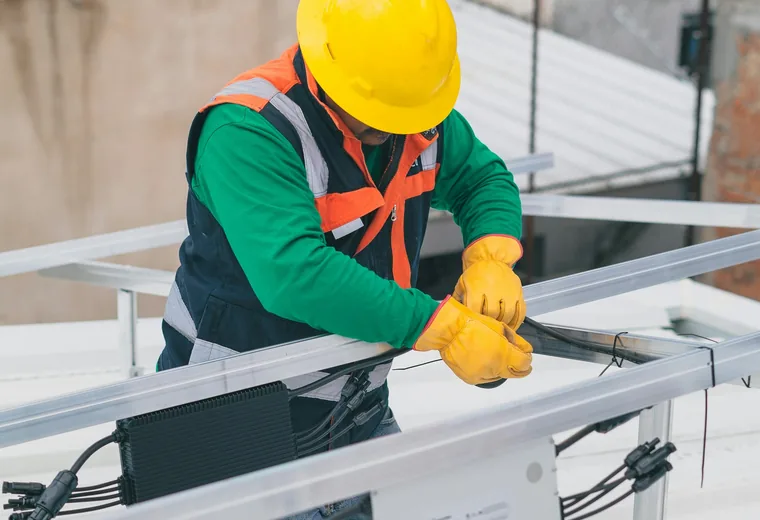
PV solar cable spools and connectors on an installation site. Image for tool identification reference only.
Quick picks: Best PV cable of 2026
Best overall: TIA-certified 6mm2 PV cable with UV-resistant jacket - °C rated, stranded copper, dual-rated for DC use.
Best budget: TIA-certified 4mm2 PV cable - lighter, more flexible, ideal for small residential arrays under 400W.
Best for large systems: 10mm2 heavy-duty PV cable - minimal voltage drop over long runs, perfect for commercial rooftops and ground mounts.
Best for beginners: Pre-terminated PV cable with MC4 connectors - plug-and-play, no crimping required.
Best value bundle: Complete PV cable kit with connectors, clips, and crimper - everything you need for a small installation.
Best overall
TIA-Certified 6mm2 PV Solar Cable
The 6mm2 PV cable remains the most popular choice for residential and small commercial solar installations in 2026. This cable size strikes the optimal balance between conductivity, flexibility, and cost. With a cross-sectional area of 6 square millimeters, it can safely carry currents up to 80 amps continuous, which covers the output of most residential panel strings ranging from 600W to 1,200W per string.
Key technical specifications to look for include a copper conductor rated Class K or Class M stranded wire, an XLPE (cross-linked polyethylene) insulation core, and a PVC outer jacket that is both UV-resistant and flame-retardant. The cable should be rated for a minimum operating temperature of 90°C and a maximum of 120°C for short-duration overload conditions. Voltage rating typically sits at 1,500V DC for North American installations, though some European-standard cables are rated at 1,000V DC. The outer jacket should carry printed markings including the manufacturer name, cable type (H1Z2Z2-K or equivalent), cross-section, and certification marks such as TIA, UL 4703, or TUV.
For residential rooftop systems with panel-to-inverter distances under 50 feet, 6mm2 PV cable delivers voltage drop well below the recommended 1% threshold. In commercial applications with longer runs up to 150 feet, the slightly higher resistance compared to 10mm2 becomes more noticeable, but the cost savings often justify the trade-off when system design accounts for the additional drop.
Optimal size for most residential systems
Excellent balance of flexibility and conductivity
Widely available in 100m and 300m spools
Compatible with all standard MC4 connectors
Slightly higher voltage drop than 10mm2 for long runs
The 4mm2 PV cable is the go-to choice for smaller solar setups, particularly DIY residential installations under 400W per string. Its smaller cross-section makes it noticeably more flexible than 6mm2 cable, which simplifies routing through tight spaces on residential rooftops. The reduced diameter also means lighter spools that are easier to handle during installation, reducing installer fatigue on multi-day projects.
Technical specifications for 4mm2 PV cable typically include a 7-strand copper conductor (Class M per IEC 60228), XLPE insulation, and a PVC outer jacket rated for 90°C continuous operation. The cable handles continuous currents up to 60 amps, which is sufficient for most small residential arrays using 60-cell or early 72-cell panel configurations. Voltage ratings mirror the 6mm2 variant at 1,500V DC for North American markets.
One important consideration for 4mm2 cable is voltage drop over distance. For runs exceeding 30 feet, the increased resistance can result in a voltage drop above the 1% recommendation. If your panel-to-inverter distance is greater than 30 feet, consider stepping up to 6mm2 or even 10mm2 cable. However, for short string runs typical in residential rooftop installations - especially those using microinverters or power optimizers where each panel operates independently at lower voltage - 4mm2 performs excellently and at a lower cost per meter.
4mm2 PV cable is also commonly used in off-grid applications such as RV solar setups, boat installations, and cabin power systems where weight and flexibility matter more than maximizing long-distance conductivity.
For commercial rooftop installations, ground-mount solar farms, and any system where panel-to-inverter distances exceed 100 feet, 10mm2 PV cable is the professional choice. Its significantly larger cross-sectional area reduces electrical resistance by roughly 40 percent compared to 6mm2 cable, minimizing voltage drop and maximizing energy harvest over long cable runs. This translates directly to more kilowatt-hours delivered to your inverter and, ultimately, more revenue or savings.
Technical specifications for 10mm2 PV cable include a 19-strand copper conductor (Class K per IEC 60228) for maximum flexibility despite the larger diameter, XLPE insulation layer, and a heavy-duty UV-resistant PVC outer jacket. The cable is rated for continuous currents up to 100 amps and voltage levels of 1,500V DC. Operating temperature range spans from -40°C to +90°C continuous, with short-duration tolerance up to 120°C. The cable construction typically follows the TIA PV1-F standard or UL 4703 for North American compliance.
In ground-mounted solar farm applications, 10mm2 cable is frequently used for combiner box-to-inverter connections where current levels are highest. On commercial rooftops with long cable runs across large surface areas, the reduced voltage drop can mean the difference between hitting the inverter MPPT voltage window and falling below it on cold mornings. While 10mm2 cable costs more per meter than 6mm2, the total system cost often decreases because fewer inverters may be needed and energy yield is higher.
Keep in mind that 10mm2 cable is stiffer and heavier than its smaller counterparts. Handling 300-meter spools of 10mm2 cable requires two people and proper lifting techniques. The larger diameter also means you need MC4 connectors rated for 10mm2 wire, which are less common than the standard 4mm2 and 6mm2 versions.
Minimal voltage drop over long cable runs
Handles highest currents in the PV cable range
Essential for commercial and utility-scale systems
Pre-terminated PV cable eliminates the need for field crimping entirely. Each cable comes factory-attached with MC4-style connectors on both ends, ready to plug directly into solar panels and junction boxes. This is the fastest and most beginner-friendly option for solar cable purchases, particularly valuable for DIY installers who do not own an MC4 crimping tool or want to avoid the risk of improper crimps that can lead to arc faults in the field.
Available in multiple lengths ranging from 1 foot to 50 feet, pre-terminated cables typically come in 4mm2 and 6mm2 sizes. The connectors are usually rated IP67 when mated, meaning they provide full dust protection and water immersion resistance - a critical specification for outdoor solar applications. Most factory-terminated cables use branded MC4-compatible connectors from manufacturers like Phoenix Contact, TE Connectivity, or Amphenol, ensuring reliable mating force and long-term weather sealing.
The trade-off with pre-terminated cables is customization. You are limited to the lengths the manufacturer offers, and if your installation requires a non-standard cable length, you may need to order multiple lengths and splice them - which introduces additional connection points and potential failure sites. For standard residential panel-to-inverter runs of 10 to 30 feet, however, pre-terminated cables in 6mm2 size cover the vast majority of use cases without any custom cutting or crimping.
From a performance standpoint, factory-terminated cables often have a slight edge over field-terminated ones. The crimping pressure applied by industrial hydraulic presses is more consistent than what most DIY installers can achieve manually, resulting in lower contact resistance at the connector interface. This is particularly important for higher-current applications where connector heating can degrade performance over time.
No crimping tool required
Factory-tested connector integrity
Available in multiple standard lengths
IP67-rated connectors for weatherproofing
Best option for DIY and beginner installers
Limited to manufacturer stock lengths
Higher price per meter than bare cable
Cannot customize exact cable lengths
Extra connector adds one more potential failure point
Complete PV cable kits bundle everything needed for a small solar installation into a single purchase. A typical kit includes 50 to 100 meters of PV cable (usually 6mm2), a pair of MC4 connectors, 20 to 50 cable clips or clamps, and sometimes a manual MC4 crimping tool. These kits are designed for hobbyists, students, and small-scale installers working on projects under 1kW capacity.
The convenience factor is the primary selling point. Instead of sourcing cable, connectors, clips, and tools from multiple suppliers, a kit provides a single SKU that covers the basic cable requirements. Many kits also include a quick-reference guide covering cable sizing basics, connector mating procedures, and safety warnings - useful for first-time solar installers who need direction beyond the product packaging.
Quality varies significantly across kits available on the market. Higher-end kits use TIA-certified cable from reputable manufacturers and genuine MC4-brand connectors. Budget kits may include unbranded connectors with questionable IP67 sealing performance. Always check the product description for certification marks and connector brand. If the listing does not specify the cable type, voltage rating, or connector manufacturer, it is safer to purchase cable and connectors separately from trusted sources.
For a standard 4-panel residential setup using 6mm2 cable, a 50-meter kit is typically sufficient. The included cable clips allow secure mounting of runs along roof rails or conduit, preventing wind uplift and UV degradation at unsupported sections. Some premium kits also include a cable length marker tape for labeling positive and negative strings - a small detail that saves significant time during commissioning and future maintenance.
All-in-one package, no multiple orders needed
Ideal for small projects under 1kW
Includes connectors, clips, and sometimes crimper
Good starter option for DIY solar builders
Connector quality may vary by kit brand
Cable length often insufficient for larger systems
May not have premium-certified components
Crimping tool quality in budget kits is inconsistent
Selecting the correct PV cable for your solar installation involves evaluating several interdependent factors. The wrong cable size can cost you hundreds of dollars in lost energy production over the system lifetime, while an oversized cable wastes money on materials you do not need. This section walks through the key decision points for choosing PV cable in 2026.
1. Determine Your System Voltage and Current
Every solar array has a maximum current output (I_max) at the panel rated operating point and a maximum system voltage (V_max) determined by the number of panels in series. The PV cable must be rated for both. For voltage, look for cables rated at least 1,000V DC (European standard) or 1,500V DC (North American standard). For current, the cable ampacity must exceed the string short-circuit current (I_sc) multiplied by the NEC safety factor of 1.25. For example, a panel with I_sc of 9.5A requires a cable rated for at least 11.87A continuous. All standard PV cables (4mm2, 6mm2, 10mm2) comfortably exceed this minimum for residential panels.
2. Calculate Voltage Drop Based on Cable Length
Voltage drop is the single most important electrical calculation in PV cable sizing. It represents the percentage of system voltage lost as current travels through the cable resistance. The formula is straightforward: Voltage Drop percent = (2 x Length x Current x Resistance per meter) / System Voltage x 100. As a rule of thumb, keep voltage drop below 1 percent for panel-to-inverter strings and below 2 percent for inverter-to-combined runs. Longer runs demand larger cable cross-sections. A 6mm2 cable over 100 feet may produce 2 to 3 percent voltage drop in a high-current string, whereas 10mm2 would keep it under 1 percent. Use online voltage drop calculators or the simplified tables below to estimate your needs.
3. Check Certifications and Standards
Not all solar cable is created equal. In North America, UL 4703 is the primary standard for photovoltaic wire. In Europe and many international markets, TIA PV1-F and IEC 62930 are the governing standards. The cable marking H07Z2-K or H1Z2Z2-K indicates European double-insulated PV cable. Look for third-party certification marks from TUV, UL, or CSA on the cable jacket or product listing. Uncertified cable may not survive the UV exposure, thermal cycling, and moisture ingress that solar installations face daily. Using non-certified cable can also void equipment warranties and fail electrical inspections.
4. Consider the Installation Environment
PV cable specifications vary based on where the cable will run. Rooftop installations expose cable to direct UV radiation, temperature swings from -20°C to +85°C on the panel surface, and potential hail impact. Ground-mounted cables may run underground or in conduit, requiring different environmental protections. Coastal installations near saltwater demand extra corrosion resistance on connector contacts. High-wind areas need properly secured cable clips at 12 to 18-inch intervals to prevent chafing. Always match the cable environmental rating to your specific installation conditions.
5. Balance Cost vs. Performance Over 25 Years
PV cable is one of the cheapest components in a solar system by dollar amount, but it is also one of the hardest to replace once installed. Running new cable through conduit after a system is commissioned is extremely expensive and disruptive. Spending an extra to on correctly sized cable today can save thousands in lost energy production over the 25-year system lifetime. Always err on the side of slightly larger cable when in doubt, especially for commercial installations where every percentage point of energy yield affects ROI.
Cable Size Guide: 4mm2 vs 6mm2 vs 10mm2
Choosing between 4mm2, 6mm2, and 10mm2 PV cable is the most common sizing decision for solar installers. Each size serves a distinct application profile. Here is a detailed breakdown to help you pick the right one.
4mm2 PV Cable
Best for: Small residential arrays (under 400W per string), microinverter systems, off-grid RV and boat installations, short panel-to-connector runs under 30 feet.
Ampacity: Up to 60A continuous.
Typical voltage drop: Approximately 0.043 ohms per 100 meters at 20°C. For a 30-foot run carrying 10A, expect about 0.4 percent voltage drop - well within acceptable limits.
Weight: Roughly 45 kg per 100m spool. Lightweight and easy for a single person to handle on a ladder.
Cost profile: Lowest cost per meter of all PV cable sizes. For budget-conscious residential projects where cable runs are short, 4mm2 delivers the best value without compromising safety or performance.
Real-world scenario: A homeowner installing a 2.4kW rooftop system with six 400W panels and a microinverter on each panel. Each panel runs approximately 15 feet to its dedicated microinverter. 4mm2 cable is perfectly adequate here, and the flexibility makes routing behind panels straightforward.
6mm2 PV Cable
Best for: Standard residential systems (400W to 1,200W per string), small commercial installations, panel-to-string-inverter runs up to 100 feet, most ground-mount configurations.
Ampacity: Up to 80A continuous.
Typical voltage drop: Approximately 0.030 ohms per 100 meters at 20°C. For a 50-foot run carrying 12A at 48V system voltage, expect about 0.75 percent voltage drop - comfortably within the 1 percent guideline.
Weight: Roughly 65 kg per 100m spool. Manageable by one person but noticeably heavier than 4mm2.
Cost profile: About 20 to 30 percent more per meter than 4mm2, but the improved current capacity and lower voltage drop make it the sweet spot for most installations. This is why 6mm2 is the default recommendation for residential solar projects.
Real-world scenario: A 6kW residential rooftop system with three strings of four 500W panels in series. Each string runs approximately 60 feet from the roof edge to the string inverter mounted on the garage wall. 6mm2 cable keeps voltage drop around 0.8 percent per string, maintaining optimal inverter MPPT performance throughout the year.
10mm2 PV Cable
Best for: Commercial and utility-scale systems, long cable runs exceeding 100 feet, high-current combiner box connections, ground-mount solar farms, systems where maximum energy yield is critical.
Ampacity: Up to 100A continuous.
Typical voltage drop: Approximately 0.019 ohms per 100 meters at 20°C. For a 150-foot run carrying 15A at 480V DC, voltage drop is under 0.3 percent - negligible impact on system performance.
Weight: Roughly 105 kg per 100m spool. Requires two-person handling and proper lifting equipment for spool deployment.
Cost profile: About 50 to 70 percent more per meter than 6mm2. However, the reduced voltage drop and higher current capacity often justify the premium in commercial settings where energy production directly translates to revenue.
Real-world scenario: A 50kW commercial rooftop installation with twelve parallel strings, each running 120 feet to a central combiner box. Using 6mm2 would result in 1.5 to 2 percent voltage drop per string, potentially pushing some strings outside the inverter MPPT range during cooler morning hours. Switching to 10mm2 brings voltage drop under 0.8 percent, ensuring every string contributes maximum power.
Quick Selection Reference
If your cable run is under 30 feet and the string current is under 15A, 4mm2 is sufficient. If your run is between 30 and 100 feet or current exceeds 15A, choose 6mm2. If your run exceeds 100 feet, current exceeds 30A, or you are designing a commercial or utility-scale system, go with 10mm2. When in doubt, 6mm2 is the safest default choice that covers the widest range of applications.
PV CABLE COMPARISON
CableBest forSizeAmpacityMax TempAmazon
6mm2 TIA-CertifiedMost systems6mm2Up to 80A90°CCompare
4mm2 TIA-CertifiedSmall residential4mm2Up to 60A90°CCompare
10mm2 Heavy-DutyCommercial systems10mm2Up to 100A90°CCompare
Pre-terminatedPlug-and-play4/6mm2Up to 80A90°CCompare
Beyond the quick comparison table above, here is a deeper look at how these cable sizes compare across key engineering parameters. This data helps system designers make informed decisions during the planning phase.
Parameter4mm26mm210mm2
Conductor strands7 strands7 strands19 strands
DC resistance (ohm/km @20°C)4.613.081.91
Current rating (continuous)60A80A100A
Voltage rating1,500V DC1,500V DC1,500V DC
Operating temp (continuous)-40°C to 90°C-40°C to 90°C-40°C to 90°C
Short-circuit tempUp to 250°CUp to 250°CUp to 250°C
Flame ratingIEC 60332-1IEC 60332-1IEC 60332-1
UV resistanceYesYesYes
Approx. weight (kg/100m)~45~65~105
Typical voltage drop (30ft, 10A)~0.4%~0.3%~0.2%
Typical voltage drop (100ft, 15A)~3.5%~2.1%~1.3%
Note: Voltage drop values are approximate and calculated at 20°C conductor temperature. Actual values will vary based on ambient temperature, conduit placement, and conductor temperature during operation. Always perform site-specific calculations for commercial designs.
PV Cable Applications by Installation Type
Different solar installation types have distinct cable requirements. Understanding these differences helps you select the right cable for your specific project category.
Residential Rooftop Systems
Most residential rooftop installations in the United States range from 4kW to 12kW in capacity. Cable runs typically extend 20 to 80 feet from the roof array to an inverter mounted on an exterior wall or in the garage. For these applications, 6mm2 PV cable is the industry standard. It provides sufficient ampacity for string currents (typically 8A to 15A per string) while keeping voltage drop under 1 percent for the majority of common layouts. 4mm2 cable is acceptable for smaller systems under 4kW with very short runs. Residential installers should also use UV-rated cable clips at 18-inch intervals along roof edges and flashing penetrations to secure cable runs properly.
Commercial Rooftop Systems
Commercial rooftop installations from 25kW to 500kW involve significantly longer cable runs, higher currents, and stricter code compliance requirements. Buildings with large flat roofs may require combiner boxes placed centrally, with individual string runs of 50 to 200 feet. 6mm2 cable works for shorter commercial string runs, but 10mm2 is preferred for runs exceeding 100 feet to maintain voltage drop below 1 percent. Commercial projects also typically require cable to be run in conduit or on cable trays, which affects derating factors. NEC Article 690 mandates that PV source circuits in commercial installations be identified with orange-colored cable or labeling at every accessible point.
Utility-Scale Ground Mount
Ground-mounted solar installations from 1MW to 100MW+ operate at the highest voltages and currents in the PV ecosystem. String voltages routinely exceed 1,000V DC, and string currents can reach 20A to 30A per panel string. Cable runs from individual strings to combiner boxes average 50 to 150 feet, while combiner box to inverter transformer runs can extend several hundred feet. 10mm2 is the minimum cable size used for string-level connections in modern utility-scale designs. For combiner-to-inverter DC collection runs, cable sizes jump to 35mm2, 50mm2, or even 95mm2 depending on total array current. All ground-mount PV cable must be rated for direct burial or run in conduit, and UV resistance becomes less critical than mechanical protection and rodent resistance.
Off-Grid and Mobile Applications
RV solar installations, boat power systems, and remote cabin power setups have unique cable requirements driven by weight constraints, vibration exposure, and limited space. 4mm2 cable is heavily favored in these applications due to its light weight and excellent flexibility. The constant motion and vibration of mobile platforms make stranded conductors essential - solid conductors would fatigue and break over time. Off-grid systems also benefit from pre-terminated PV cable to minimize field crimping in confined spaces where working with tools is difficult. Battery bank connections in off-grid systems use separate heavy-gauge battery cable (not PV cable) and should never be confused with PV string wiring.
How to choose PV cable
Cable size: 4mm2 for small residential, 6mm2 for most systems, 10mm2 for commercial. Larger = less voltage drop but more expensive. See our Cable Size Guide above for detailed comparisons.
Certification: Look for TIA, UL 4703, or TUV certification. This ensures the cable meets solar-specific standards for UV resistance, flame retardancy, and temperature performance.
UV resistance: PV cable must be rated for direct sunlight exposure. Look for UV-resistant outer jacket marked with H1Z2Z2-K or equivalent. Non-UV-rated wire degrades within 2 to 3 years of sun exposure.
Temperature rating: Minimum 90°C for extreme climates. Some cables rated to 120°C for very hot environments or cables running inside hot conduits. Check the panel datasheet for maximum string voltage at lowest expected temperature.
Conductor type: Stranded copper (Class K or M per IEC 60228) is more flexible than solid copper. Essential for rooftop routing through tight spaces and around mounting rails.
Connector compatibility: Ensure your cable gauge matches the MC4 connector size. Most standard MC4 connectors accept 4mm2 and 6mm2. 10mm2 requires specific larger-range connectors.
Frequently Asked Questions About PV Cable
Can I use regular electrical wire instead of PV cable?
No. Regular electrical wire (such as THHN or Romex) is not designed for the harsh outdoor conditions that PV cable faces. PV cable uses cross-linked polyethylene (XLPE) insulation, which tolerates much higher temperatures and resists UV degradation, moisture ingress, and chemical exposure. Regular wire insulation cracks and deteriorates within a few years of sun exposure, creating fire hazards and system failures. Always use cable specifically rated for photovoltaic applications.
What is the difference between 4mm2 and 6mm2 PV cable?
The primary difference is current-carrying capacity and voltage drop characteristics. 6mm2 cable has about 50 percent more copper cross-section than 4mm2, giving it higher ampacity (80A vs 60A) and roughly 33 percent lower electrical resistance. For short runs under 30 feet with low current strings, 4mm2 is sufficient and cheaper. For runs between 30 and 100 feet or higher-current strings, 6mm2 is the better choice. In practice, 6mm2 has become the default for most residential installations because the cost difference is marginal and the performance margin is meaningful.
How long does PV cable last?
Quality PV cable is rated for a minimum 25-year service life, which aligns with standard solar panel warranties. The XLPE insulation and UV-resistant PVC jacket are engineered to withstand decades of thermal cycling, ultraviolet exposure, and environmental stress without significant degradation. In real-world installations, properly specified and installed PV cable typically performs well beyond 25 years with minimal increase in resistance or loss of insulation integrity. The connectors, however, may require inspection and occasional replacement after 15 to 20 years due to O-ring aging and contact oxidation.
Do I need to use conduit for PV cable on a rooftop?
In many jurisdictions, PV cable running exposed on a rooftop does not require conduit because the cable jacket itself is UV-rated and mechanically robust. However, local electrical codes vary, and some authorities having jurisdiction require all DC wiring to be in conduit for physical protection. Cable clips or UV-rated cable trays are typically sufficient for securing exposed runs. Conduit becomes mandatory where cable passes through walls, roofs, or areas subject to physical damage. When in doubt, consult your local electrical inspector before installation.
What size PV cable do I need for a 10kW system?
A 10kW system typically consists of 20 to 25 panels depending on individual wattage. The cable size depends on your string configuration. If you wire panels in strings of 10 to 12, each string produces roughly 300W to 600W at 8A to 12A current. For string-level wiring with runs under 80 feet, 6mm2 is appropriate. For the main DC combiner-to-inverter run carrying aggregated string current, you may need 10mm2 or larger depending on total current and distance. Always perform a voltage drop calculation for your specific layout.
Can I splice PV cable to extend its length?
Splicing PV cable is possible but not recommended whenever avoidable. Every splice introduces additional resistance, a potential water ingress point, and a future failure site. If you must extend cable, use approved MC4 extension connectors of the same gauge rather than cutting and twisting wires together. Splices should only be performed by qualified electricians using proper solder joints, heat-shrink tubing with adhesive lining, or mechanical connectors rated for DC solar applications. Never use standard wire nuts for PV cable splices - they are not rated for the continuous DC arcing that can occur in solar circuits.
Is orange PV cable different from black PV cable?
No. The color of PV cable jacket has no impact on electrical performance. Orange cable is commonly used in North America because NEC Article 690 requires PV source circuit conductors to be identified with an orange outer jacket or equivalent marking. Black cable is more common in European and international markets where this color coding is not mandated. Both colors offer identical UV resistance, temperature ratings, and conductivity. Choose based on local code requirements or aesthetic preference.
What does TIA certification mean for PV cable?
TIA certification refers to compliance with the Technical Inspection Association PV1-F standard, which is one of the most widely recognized and rigorously tested PV cable standards globally. TIA-certified cable has passed extensive testing for UV resistance, flame propagation, mechanical stress, thermal cycling, and chemical resistance. In the European market, TIA PV1-F is effectively the minimum standard for any solar installation. In North America, UL 4703 serves a similar role. When shopping on Amazon, look for listings that explicitly mention TIA, UL 4703, or TUV certification marks.
Safety Note: This page is a buying guide, not a wiring guide. PV cable selection involves electrical calculations for voltage drop and current capacity. Always consult a qualified electrician and follow local electrical codes.