Best Ladder for Solar Panel Installation 2026: Top 5 Rooftop Ladders Compared
Choosing the right ladder is one of the first decisions every solar installer makes before stepping onto a roof. A poor ladder choice compromises stability, increases fatigue, and creates unnecessary risk when carrying PV modules, racking components, and tool kits to rooftop work areas. This guide compares the best ladders for solar panel installation in 2026 锟斤拷 evaluated by weight capacity, material construction, roof compatibility, storage size, and real-world solar professional use. It does not cover ladder safety procedures, climbing techniques, or fall protection protocols.
VP
By Vopace Research DeskUpdated June 28, 2026 | Best ladder for solar panel installation comparison
Affiliate Disclosure: As an Amazon Associate, Vopace earns from qualifying purchases. This page may contain affiliate links.
Guide, Not Instruction: This page helps you choose and purchase a ladder. It does not teach ladder safety, climbing, or solar installation procedures. Always read the manufacturer manual and follow OSHA guidelines for ladder use.
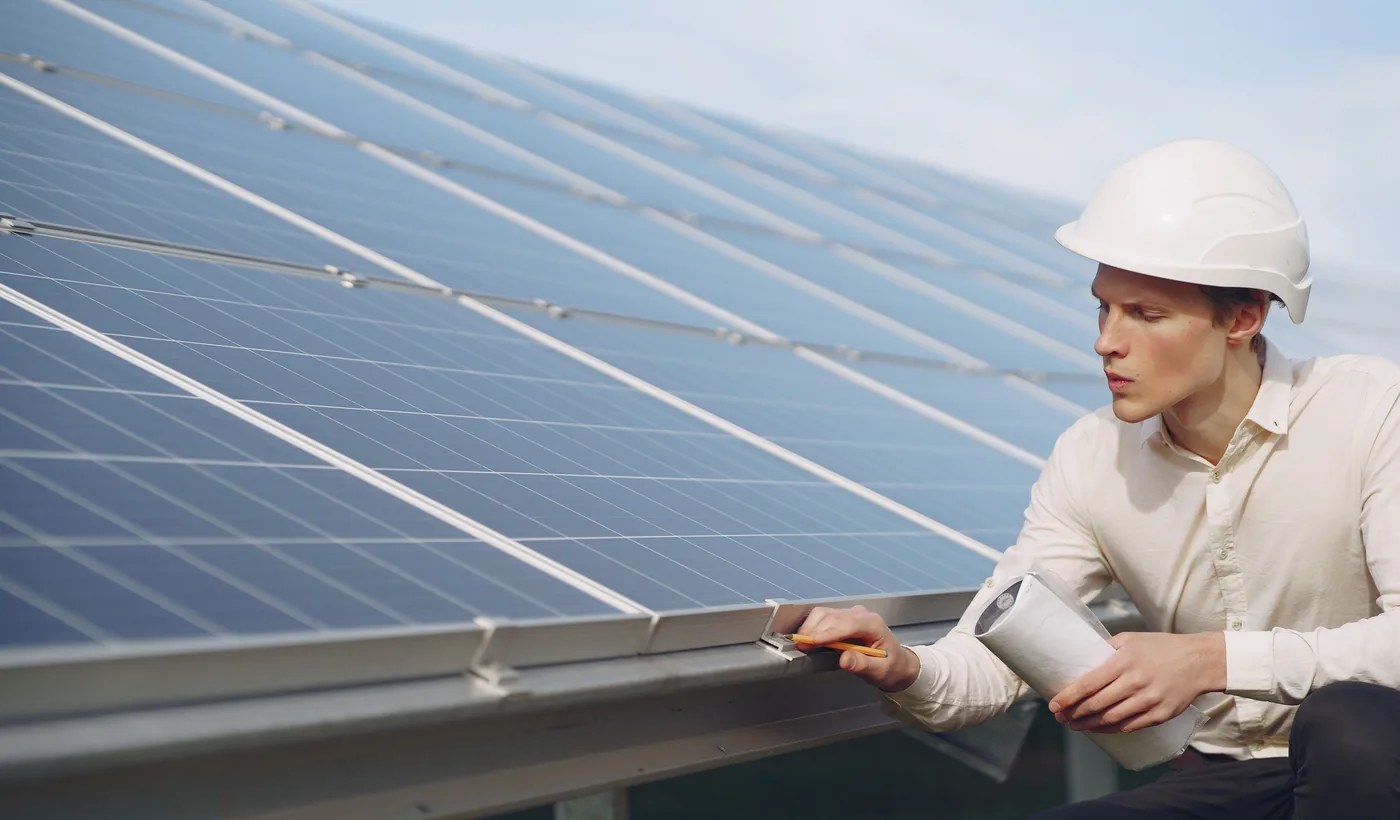
Fiberglass extension ladders are the most common choice for solar panel installation work due to their non-conductive properties. Image for product identification reference only.
Quick picks: Best ladders for solar panel installation in 2026
Best overall ladder: 34-foot fiberglass extension ladder with 375 lb duty rating 锟斤拷 maximum reach, non-conductive, and built for daily professional solar crew use on residential and commercial rooftops.
Best lightweight option: Aluminum telescoping ladder that collapses to fit in a standard crew van 锟斤拷 ideal for installers who travel between job sites and need fast setup and breakdown.
Best heavy-duty ladder: Type IAA rated fiberglass ladder with 375 lb capacity and reinforced spreaders 锟斤拷 designed for crews carrying multiple PV modules, rail kits, and drilling equipment.
Best multi-position ladder: Telescoping multi-config ladder offering extension, A-frame, stair, and scaffolding modes 锟斤拷 versatile enough for ground-level panel prep and rooftop placement.
Best specialty ladder: Rooftop truss ladder with ridge hooks for steep-pitch residential roofs 锟斤拷 provides secure anchoring without separate ladder anchors or roof straps.
Why ladder choice matters for solar panel installation
Solar panel installation is fundamentally a rooftop operation. Before any PV module touches a roof, before any mounting rail gets positioned, and before any MC4 connector gets crimped, the installer needs a reliable vertical access point. The ladder you select directly impacts how efficiently your crew can move materials from the ground to the roof edge.
Unlike general construction ladders, solar installation ladders face unique demands. Crews routinely carry 40-pound PV modules, 10-foot aluminum mounting rails, drill kits weighing 15 pounds or more, and tool belts loaded with torque wrenches, wire strippers, and multimeters. A ladder rated for 225 pounds may safely support a single person, but it becomes inadequate when that person is also carrying equipment up three flights of roof access.
Material selection is equally critical. Solar installers work with live electrical systems. Even de-energized PV arrays can produce voltage when exposed to sunlight. Fiberglass ladders provide essential non-conductive properties that aluminum ladders cannot match. This is the primary reason fiberglass dominates the solar installation ladder market.
Storage and transport considerations also play a significant role. Solar contracting companies typically service multiple residential properties per day. A ladder that takes ten minutes to extend and lock into position adds up quickly over a six-job schedule. Telescoping and quick-lock designs reduce setup time, which translates directly into more billable hours spent on productive rooftop work rather than ladder positioning.
Top 5 ladders for solar panel installation: Detailed reviews
Best Overall
34-Foot Fiberglass Extension Ladder 锟斤拷 Professional Grade
This 34-foot fiberglass extension ladder represents the gold standard for solar panel installation crews who need maximum roof access height. With a Type IAA duty rating supporting 375 pounds, this ladder accommodates the heaviest professional users plus their equipment load. The double-truss fiberglass construction provides exceptional rigidity, while the extended 34-foot length reaches roofs up to 30 feet tall 锟斤拷 covering most commercial solar installations and large residential properties.
The spur gear foot design grips shingle surfaces effectively, reducing lateral slide on textured roofing materials commonly found on residential properties. Wide fiberglass spreader locks engage automatically and lock securely, maintaining the A-frame extension angle throughout the work session. The rung spacing is optimized for comfortable climbing when hands are occupied with conduit, PV modules, or racking hardware.
Weight is the tradeoff. At approximately 85 pounds, this ladder requires two people to transport safely between job sites. Solar contracting companies typically mount ladder racks on their work vans to handle this weight profile. Single-person installers may find this ladder cumbersome for frequent relocation between properties.
Specification
Details
Material
Fiberglass double truss
Duty Rating
Type IAA 锟斤拷 375 lb
Max Height
34 feet extension
Reach Height
Approximately 38 feet
Weight
~85 lbs
Rungs
Wide fiberglass treads
Best Use
Commercial solar, large residential
375 lb capacity handles crews with full tool loads
Non-conductive fiberglass essential for electrical environments
Maximum 34-foot extension covers tallest residential roofs
Aluminum Telescoping Ladder 锟斤拷 Compact Transport Design
Aluminum telescoping ladders have gained significant traction among solar installation professionals who prioritize transport efficiency over maximum height. These ladders collapse to roughly half their extended length, fitting into the back of a standard cargo van or even a large SUV 锟斤拷 a substantial advantage for solo solar contractors who lack specialized ladder rack configurations.
The telescoping mechanism uses individual rung locks that extend and retract one section at a time. This design allows flexible height adjustment in one-foot increments, enabling precise positioning against roof edges of varying heights. Instead of carrying a 29-foot ladder when a 22-foot reach suffices, installers can configure the exact height needed for each property.
Aluminum construction keeps weight significantly lower than equivalent fiberglass models. A typical 29-foot telescoping aluminum ladder weighs around 38 pounds 锟斤拷 less than half the weight of a comparable fiberglass extension ladder. This weight difference enables single-person loading, transport, and deployment without assistance. The tradeoff is reduced maximum weight capacity and no electrical insulation properties.
Specification
Details
Material
Aluminum alloy
Duty Rating
Type IA 锟斤拷 300 lb
Max Height
29 feet extension
Collapsed Length
Approximately 16 feet
Weight
~38 lbs
Rungs
Narrower aluminum steps
Best Use
Solo installers, frequent relocation
Collapses to van-friendly dimensions
Lightweight enough for solo transport
Adjustable height in one-foot increments
Lower cost than equivalent fiberglass models
Aluminum conducts electricity 锟斤拷 not ideal near live circuits
Heavy-Duty Fiberglass Triple-Section Ladder 锟斤拷 Maximum Load Capacity
Heavy-duty fiberglass ladders are engineered for solar installation crews that consistently work with maximum loads. These triple-section fiberglass ladders feature reinforced rail joints, oversized spreaders, and industrial-grade locking hardware designed to withstand daily abuse on active construction and solar installation sites.
The defining characteristic of heavy-duty ladders is their Type IAA 375-pound duty rating combined with specialized load distribution engineering. Unlike standard extension ladders, heavy-duty models often incorporate wider base spreaders that distribute the load across more roof surface area. This reduces point pressure on shingles and minimizes the risk of deck damage during extended positioning periods.
For solar panel installation specifically, heavy-duty fiberglass ladders excel when crews need to stage multiple PV modules on upper rungs while simultaneously having two installers on the ladder at different positions. The reinforced construction maintains deflection well within safe limits even under asymmetric loading conditions 锟斤拷 a scenario that occurs frequently during module handoff from ground crew to rooftop workers.
Multi-Position Telescoping Ladder 锟斤拷 Four Configurations in One
Multi-position telescoping ladders represent the versatility category for solar installation professionals who need a single ladder to handle diverse access scenarios. These ladders convert between extension ladder, straight ladder, L-shaped stairway ladder, and A-frame configurations 锟斤拷 providing coverage for ground-level panel preparation, stairwell access at commercial sites, and standard rooftop deployment.
The four-configuration capability is particularly valuable for solar contractors working on commercial installations where roof access may involve stairwells, mezzanine levels, or ground-to-roof transitions. An L-shaped configuration bridges stairwell gaps that would normally require separate ladder equipment. The A-frame mode serves as a stable work platform for ground-level tasks like unpacking PV modules from shipping pallets or organizing mounting rail stacks.
Height adjustability mirrors the telescoping design with independent rung locks extending each section individually. This allows solar installers to fine-tune ladder height for precise roof-edge alignment without the trial-and-error repositioning that fixed-length ladders demand. The hinge-locking mechanism between sections is robust, though the overall weight capacity tends toward the Type IA 250-pound range 锟斤拷 adequate for single-person use but not for staged equipment loads.
Specification
Details
Material
Aluminum telescoping
Duty Rating
Type IA 锟斤拷 250 lb
Max Height
22 feet extension
Configurations
Extension, straight, L-shape, A-frame
Weight
~44 lbs
Rungs
Standard aluminum with grip texture
Best Use
Mixed residential and commercial solar jobs
Four configurations replace multiple single-purpose ladders
Compact collapsed size fits standard vehicles
L-shape mode handles stairwell and mezzanine access
Reasonable weight for solo handling
250 lb capacity limits equipment staging
Shorter max height than dedicated extension ladders
Hinge mechanisms add complexity and potential failure points
Rooftop Truss Ladder with Ridge Hooks 锟斤拷 Steep-Pitch Specialist
Rooftop truss ladders are specialized access equipment designed exclusively for steep-pitch residential roofs where standard extension ladders struggle with stability. These ladders feature heavy-duty metal hooks at the top that engage directly over the roof ridge or truss structure, mechanically anchoring the ladder in place without relying on friction, ladder anchors, or roof strap systems.
For solar panel installation, steep-pitch roofs represent a significant subset of residential work. Many newer suburban developments use roof pitches between 6:12 and 12:12 锟斤拷 slopes where a standard extension ladder can feel precarious, especially when carrying PV modules that shift the installer center of gravity. The ridge-hook attachment eliminates this concern by converting the ladder from a friction-dependent access tool into a mechanically secured platform.
The tradeoff is specificity. Rooftop truss ladders only work on pitched roofs with accessible ridges. They are useless on flat commercial roofs, shed-style structures, or properties with parapet walls. Solar contractors whose business focuses primarily on steep-pitch residential work will find these ladders indispensable. Those servicing mixed roof types should consider them as a secondary specialty ladder alongside a primary fiberglass extension model.
Specification
Details
Material
Fiberglass rails with steel hooks
Duty Rating
Type I 锟斤拷 250 lb
Max Height
24 feet extension
Hook Type
Heavy-duty steel ridge hooks
Weight
~68 lbs
Rungs
Fiberglass with anti-slip coating
Best Use
Steep-pitch residential solar installations
Ridge hooks provide mechanical roof anchoring
Essential for steep-pitch residential roofs
Eliminates need for separate ladder anchors
Fiberglass rails maintain electrical insulation
Only functional on pitched roofs with accessible ridges
Fiberglass vs aluminum ladder materials for solar work
Ladder material selection is the first decision solar installers face when purchasing a new ladder. The two dominant materials 锟斤拷 fiberglass and aluminum 锟斤拷 each offer distinct advantages and limitations that directly impact solar installation workflow.
Fiberglass ladders are non-conductive, making them the preferred choice for solar professionals who regularly work near live electrical circuits. Even when PV arrays are disconnected from the grid, modules exposed to sunlight generate DC voltage that travels through the ladder if it is made of conductive material. Fiberglass eliminates this hazard entirely. The material is also resistant to UV degradation from prolonged sun exposure during outdoor job site storage.
Aluminum ladders are significantly lighter than fiberglass equivalents, typically weighing 40 to 50 percent less for comparable height ratings. This weight advantage enables single-person transport and deployment, reducing crew fatigue and setup time. However, aluminum conducts electricity, which creates a safety concern for solar installers working with energized systems. Many professional solar companies restrict aluminum ladder use to ground-level tasks only.
For solar panel installation specifically, fiberglass remains the dominant material choice. The weight penalty is considered an acceptable tradeoff for the electrical insulation properties that protect crews working with live PV arrays. Companies that prioritize transport efficiency may maintain both fiberglass and aluminum ladders in their fleet, assigning each type to appropriate work scenarios.
Understanding ladder duty ratings for solar professionals
Ladder duty ratings specify the maximum total weight the ladder can safely support, including the user, tools, and any materials being carried. Solar installation presents unique load demands that exceed standard household ladder requirements.
Type IAA (375 lb) ladders offer the highest commercial rating and are suitable for professional solar crews carrying PV modules, mounting rails, and tool kits simultaneously. Type IA (300 lb) ladders accommodate most individual installers with moderate equipment loads. Type I (250 lb) ladders are adequate for solo use without material transport. Type II (225 lb) and Type III (200 lb) ratings are insufficient for solar installation work and should be avoided in professional contexts.
Consider the actual load scenario: a 200-pound installer wearing a tool belt (15 pounds), carrying two MC4 connectors and a crimping tool (3 pounds), with a PV module handed up from ground crew (40 pounds). This totals 258 pounds 锟斤拷 exceeding a 250-pound Type I rating. Selecting a Type IA or IAA ladder prevents overload situations that compromise ladder integrity.
Ladder storage and transport considerations for solar crews
Solar installation companies operate mobile work environments where ladder storage in work vehicles and transport between job sites are daily operational concerns. The physical dimensions and weight of a ladder directly affect how efficiently crews can move between properties throughout a workday.
Fixed-length extension ladders require dedicated ladder racks on work vans or trucks. These racks must be properly rated for the ladder weight and securely mounted to the vehicle frame. Solar contracting companies typically invest in aluminum ladder rack systems that distribute weight evenly and allow quick ladder removal without specialized equipment.
Telescoping ladders solve the transport challenge by collapsing to roughly half their extended length. A 29-foot telescoping ladder stores in approximately 16 feet of space, fitting into cargo vans without external racks. This convenience comes at the cost of reduced maximum height and weight capacity compared to fixed-length models.
For solar companies servicing urban or suburban areas with narrow streets and limited parking, the compact storage advantage of telescoping designs often outweighs the performance limitations. Rural contractors with ample staging space may prefer the reach and capacity of traditional extension ladders stored on dedicated racks.
Different roof types and materials require different ladder attachment strategies to ensure stable positioning during solar installation work. Understanding these requirements helps solar professionals select ladders with appropriate accessory compatibility.
Asphalt shingle roofs 锟斤拷 the most common residential roofing material 锟斤拷 benefit from ladder spur gears or stabilizer bars that distribute contact pressure across a wider surface area. These features prevent ladder feet from embedding into soft shingle surfaces, which can cause dangerous ladder settlement during use.
Metal standing-seam roofs present a different challenge. Standard ladder stabilizers can damage seam profiles if not properly configured. Solar installers working on metal-roofed properties should select ladders with adjustable stabilizer bars that can be reconfigured for narrow-seam applications.
Tile roofs require special attention. Clay and concrete tiles are brittle and crack under concentrated point loads. Ladder toe pads or roof bridging systems that span multiple tile courses distribute the ladder contact force and prevent tile damage. Some solar companies invest in dedicated roof bridging equipment rather than risking costly tile replacements.
Essential ladder accessories for solar installation
While the ladder itself is the primary investment, several accessories significantly enhance ladder functionality and safety for solar installation professionals. These accessories are often sold separately and should factor into the total cost of ownership calculation.
Ladder levelers compensate for uneven ground surfaces at job sites. Solar installations frequently occur on properties with sloped driveways, uneven terrain, or gravel access paths. Adjustable ladder levelers allow each leg to extend independently, ensuring the ladder base sits plumb even on compromised ground conditions.
Ladder hooks and roof attachments provide secondary security beyond the ladder own spreader system. Hook attachments engage roof edges or fascia boards, preventing backward ladder slip during upward climbs. For solar crews working on steep pitches, these hooks serve as a critical backup to primary ladder positioning.
Tool trays mounted to ladder rails enable solar installers to carry small components 锟斤拷 MC4 connectors, wire ties, torque wrench bits 锟斤拷 without descending to retrieve dropped items. This accessory reduces time wasted climbing up and down for missed components, directly improving installation productivity.
How to choose the right ladder for solar panel installation
Match duty rating to your crew load: Select Type IA (300 lb) minimum for professional solar work. Type IAA (375 lb) is ideal for crews carrying modules and equipment simultaneously.
Prioritize fiberglass for electrical environments: Non-conductive fiberglass construction is essential when working near live PV arrays. Reserve aluminum for ground-level tasks only.
Calculate required reach height: Measure your most common roof height and add at least 3 feet for safe roof transition. A 26-foot ladder reaches approximately a 23-foot roof.
Evaluate transport logistics: Consider van rack capacity, vehicle size, and crew strength for ladder handling. Telescoping models save space but sacrifice some height and capacity.
Check roof-type compatibility: Ensure the ladder supports your typical roofing materials with appropriate stabilizers, spur gears, or bridging systems.
Budget for accessories: Factor in levelers, hooks, and tool trays as essential additions rather than optional extras for professional solar installation use.
Frequently asked questions about solar panel installation ladders
What is the best ladder material for solar panel installation?
Fiberglass is the best ladder material for solar panel installation because it is non-conductive. Solar installers work near live electrical circuits, and fiberglass provides the electrical insulation that aluminum ladders cannot. The slightly higher weight of fiberglass is an acceptable tradeoff for the safety benefit.
How tall should a ladder be for residential solar panel installation?
Most residential solar installations require a ladder that extends at least 26 feet to safely reach roof edges. The ladder should extend at least 3 feet above the roof line for secure transition. For two-story homes with taller rooflines, a 30 to 34-foot extension ladder may be necessary.
Can I use an aluminum ladder for solar panel work?
Aluminum ladders can be used for ground-level solar tasks such as unpacking modules and organizing equipment. However, they should not be used when working near live PV arrays because aluminum conducts electricity. Many professional solar companies maintain both fiberglass and aluminum ladders, assigning each type to appropriate scenarios.
What duty rating do solar installers need?
Professional solar installers should use ladders rated Type IA (300 lb) or Type IAA (375 lb). These ratings account for the installer body weight plus tools, PV modules, mounting rails, and other equipment carried to the roof. Lower-rated ladders are insufficient for professional solar work.
Do I need a special ladder for steep-pitch roofs?
Steep-pitch roofs benefit from ladders with ridge hooks or rooftop truss designs that mechanically anchor to the roof structure. Standard extension ladders rely on friction and ladder anchors, which may be insufficient on pitches steeper than 8:12. Rooftop truss ladders provide superior stability for steep residential solar installations.
Ladder comparison summary
Ladder TypeBest forMaterialCapacityAmazon
34ft Fiberglass ExtensionAll-around solar workFiberglass375 lbCompare
Rooftop Truss with HooksSteep residential roofsFiberglass250 lbCompare
Final thoughts: Choosing the right ladder for your solar installation business
Selecting the right ladder for solar panel installation depends on your specific work profile 锟斤拷 roof types, crew size, transport capabilities, and electrical exposure frequency. There is no single perfect ladder for every solar contractor, but there is a right ladder for your particular operation.
For solar companies servicing predominantly residential properties with moderate roof pitches, a fiberglass extension ladder in the 26 to 34-foot range offers the best combination of reach, electrical safety, and load capacity. Companies that frequently relocate between urban properties may benefit from adding a telescoping model for transport efficiency.
Professional solar contractors with heavy daily loads should prioritize Type IAA-rated fiberglass ladders with reinforced spreaders and spur gear feet. The higher initial investment pays for itself through improved crew safety, reduced equipment fatigue, and the ability to stage materials on upper rungs without compromising structural integrity.
Regardless of the ladder you choose, always verify compatibility with your typical roof types, ensure proper transport logistics are in place, and invest in essential accessories like levelers, hooks, and tool trays. The right ladder ecosystem 锟斤拷 not just the ladder itself 锟斤拷 creates the foundation for efficient, safe solar panel installation operations.
Safety Note: This page is a buying guide, not a safety guide. Ladders are for selecting and purchasing the right tool. Proper ladder safety, climbing procedures, and fall protection should come from the ladder manufacturer, OSHA standards, and qualified training programs. Always consult a qualified professional.